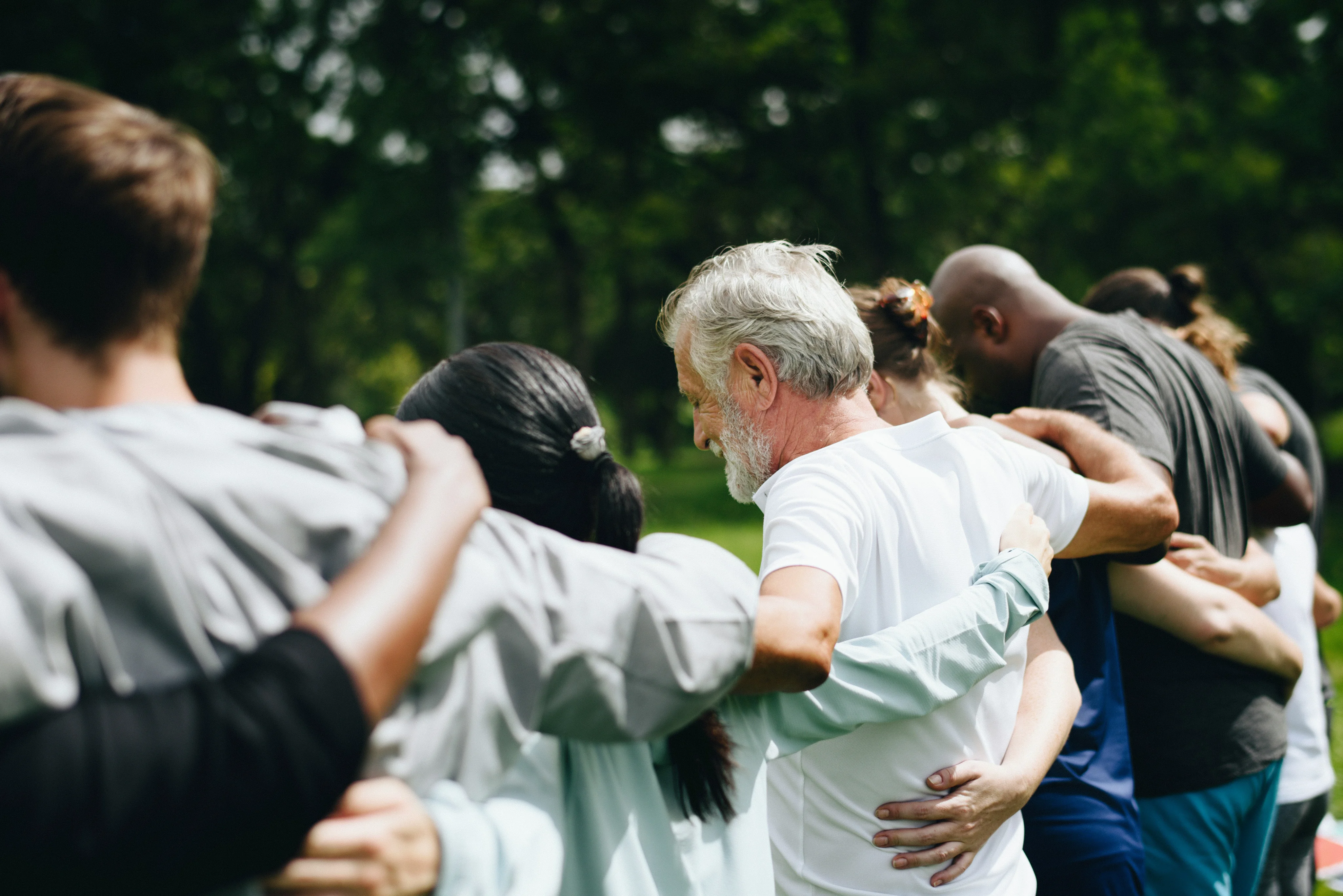

You get old alone. You grow long in company.
Three of the four pillars ask you to go and do something by yourself. This one is different, and it is the one most people get wrong, not because they disagree, but because there is nothing to buy and no obvious place to start. So we built the place to start. We call it an ohana.
Join an OhanaItems in the Blue Zones Power 9 that are about other people
Cigarettes a day: the cardiovascular comparison for chronic isolation
Members across seven ohana
Loneliness is an inflammatory disease.
This is not a figure of speech, and it is not a comment about how loneliness feels. Chronic disconnection runs through the IL-6 inflammatory pathway and the HPA axis, the same machinery that stress, poor sleep and visceral fat run through. It shows up in blood work. It shows up in cardiovascular outcomes. It appears to move the biological aging clock.
The comparison most people have heard, that chronic isolation carries a cardiovascular cost on the order of smoking fifteen cigarettes a day, is startling enough that it tends to get repeated without the study attached. We attach the study. What we do not claim: that friendship treats a diagnosis, or that a potluck replaces a cardiologist. What the evidence supports is narrower and more useful: that connection is a modifiable risk factor, that it is measurable, and that almost nobody is treating it like one.

The most-cited framework in longevity is the Blue Zones Power 9: nine habits common to the world's longest-lived populations. Move naturally. Downshift. The 80% rule. Plant slant. Wine at five. And then three that almost nobody counts together: Belong. Loved Ones First. Right Tribe.
A third of the list is other people. Not diet, not exercise, not stress: who you see, who you are committed to, and who you are surrounded by while you do everything else. It is the least commercial third and therefore the least discussed.
Three of the nine.

Belong
Showing up somewhere, regularly
In the Blue Zones research this is usually a faith community. The mechanism is not theology: it is a standing weekly appointment with people who notice your absence.

Loved Ones First
Proximity and commitment
Family kept close, and obligations honoured. In Hawaiʻi this needs no translation at all.

Right Tribe
The company you keep while you do everything else
Habits travel through social networks. The people around you are, in effect, deciding what is normal, which makes choosing them a health intervention.
Framework and terminology: Blue Zones / Dan Buettner. We borrow it to make a point: we are not a chapter of it.
Okinawa calls it a moai.
On Okinawa, one of the longest-lived populations ever studied, children were traditionally placed into a moai: a small group of about five, committed to each other for life. They met regularly for decades. They pooled money. They turned up when someone was ill, widowed or broke. Some moai have run for ninety years.
Blue Zones describes the arrangement plainly: if you get sick, or a spouse dies, or you run out of money, we know someone will step in and help. It is not a social club. It is infrastructure.
Most of us were not placed in one at five years old. That is the whole problem, and it is a solvable one: the moai is not magic, it is structure: a small group, a fixed rhythm, and a commitment that outlasts anyone's motivation. An ohana is that structure, built deliberately and built late. Ours meet weekly instead of for ninety years, and nobody is assigning you to one at birth. You just have to walk in once.
This is Dr. Peterson's line and it is the most useful sentence on this page. Telling someone to eat better and move more does not help them eat better and move more. Everyone already knows. Knowing has never once been the bottleneck.
What actually changes behaviour over years is embarrassingly low-tech: a standing time, a specific place, and people who notice when you do not turn up. Social pressure, in the good direction, for a change.
Which means the fourth pillar is not really one of four. It is the mechanism by which the other three happen at all.
Information is not an adherence mechanism.
The Other Three, Alone
Willpower, on a schedule you set yourself.
Works for about six weeks. Then a Tuesday comes along when it rains, nothing is on the calendar, and nobody would know either way.
The Other Three, Together
A calendar, and thirty people who notice.
Members average three sessions a week and one feast. Not because they are more disciplined, because it is the easiest thing they do all week.
What an ohana actually does.
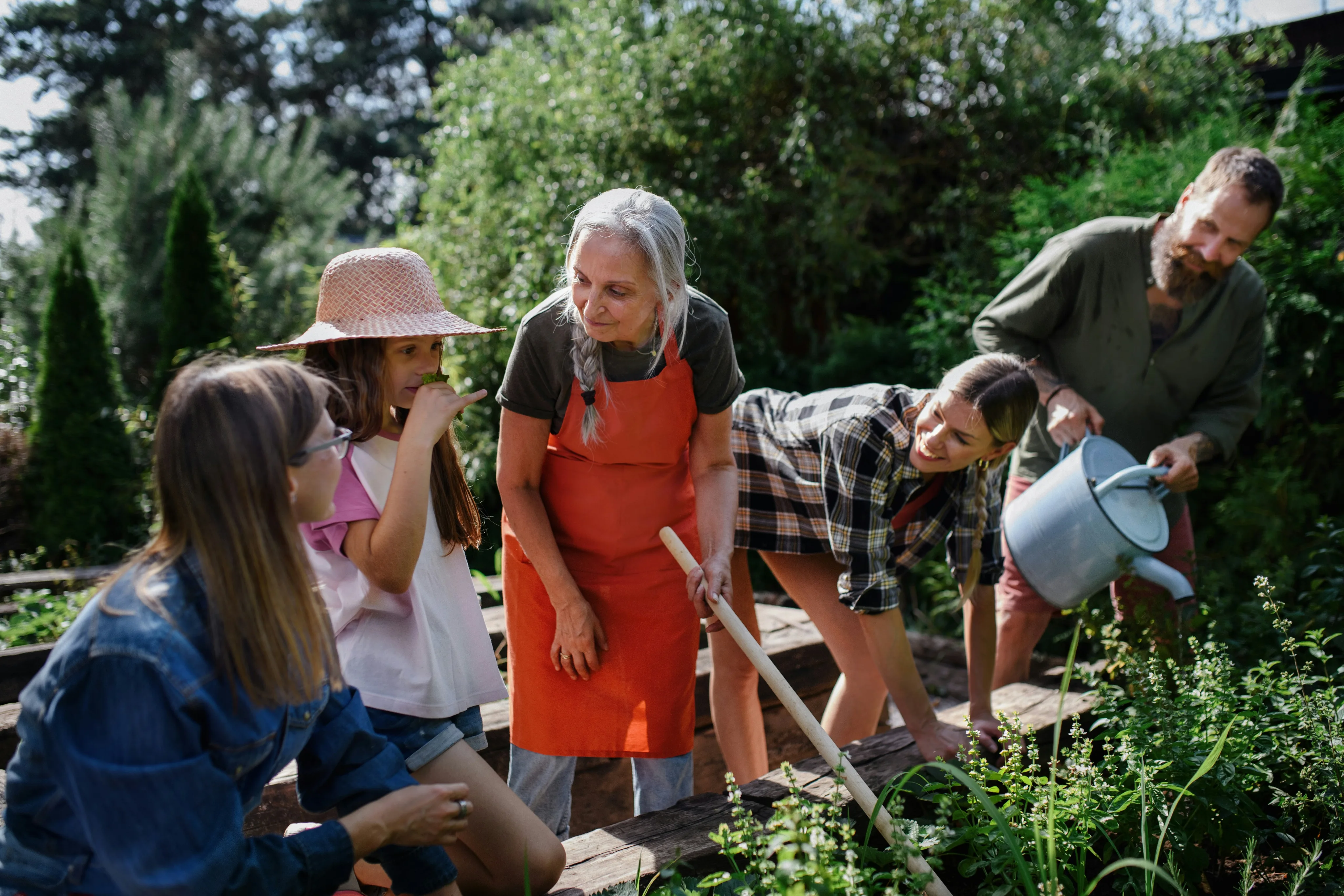
None of this is elaborate. It is the same handful of things, every week, for years, which is the only reason it works.
Weekly
Story circles
People over sixty are carrying most of the interesting material in any room. Somebody should be asking.
Weekly
Buddy check-ins
One person whose job it is to notice. Not a programme: a name and a phone number.
Fridays
The potluck
Bring a dish. The long-life table is loud, crowded and full of olive oil, and it doubles as the diet pillar.
Always
The intake
An intake process that guarantees no one walks in as a stranger twice. Somebody is expecting you and will introduce you to three people before anything starts.
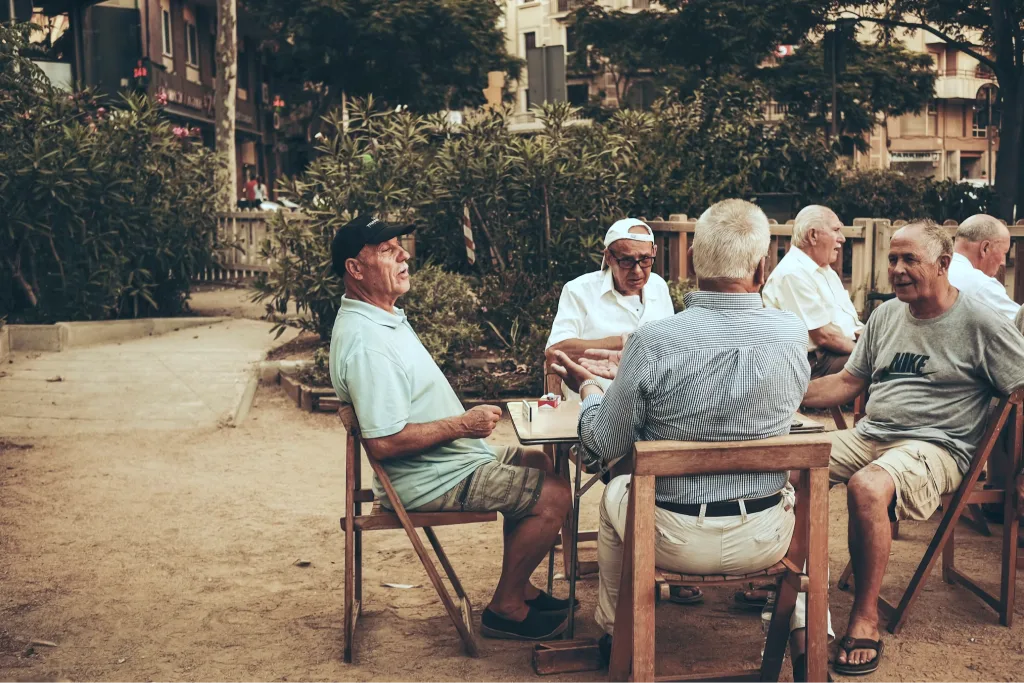
Purpose is a longevity drug.
The other half of this pillar is not company, it is being needed. Every chapter adopts causes: beach restoration, mentorship programmes, meal delivery for homebound kūpuna, literacy tutoring. Purpose lowers cortisol, raises meaning, and keeps a calendar full of reasons to be somewhere on a Tuesday morning.
It is also the only part of this that runs in the opposite direction. Everything else on this site is something you do for yourself. This is the part where somebody is waiting on you, which, it turns out, is considerably more motivating.
No chapter near you?
Join an OhanaThen build the structure yourself, because the structure is the active ingredient, not us. Three or four people. One fixed time a week that does not move. One thing you do together that would be slightly harder alone. Somebody whose job it is to notice when a person misses two in a row.
That is a moai. That is an ohana. It does not require our name on it, and the literature does not care whose logo is on the door.
If you would rather not start from scratch, we will help.
The Community
From the ohana
Come home.
Seven chapters across the islands. First three visits are always free. Bring a friend, an empty water bottle, and something to put lunch in.