

Peak.Slope.Floor.
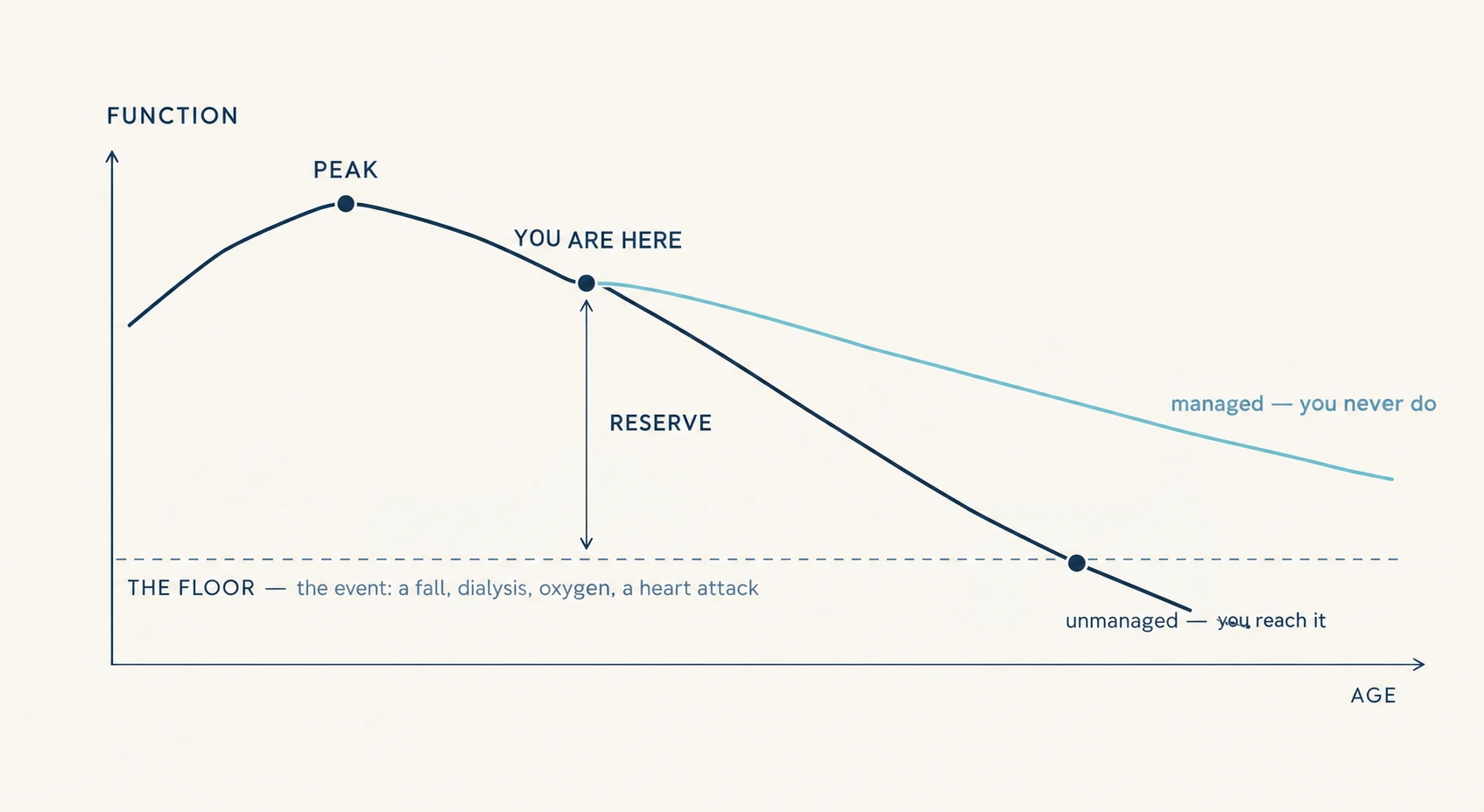
You cannot stop the decline. You can change its slope, and the whole goal is a slope shallow enough that you never reach the floor before the end of your life.
Every system in your body follows the same shape. It rises to a peak, then declines at some rate, and somewhere below there is a floor: not a number, an event. A fall and a broken hip. Dialysis. Oxygen. A heart attack.
The useful questions are: which system, how steep, and how far away is the floor?
Trajectories
Peak, slope, floor, reserve. What the average rate of decline looks like per system, and how to work out where you sit on your own curves. Failure modes: some systems fail by gradual attrition, others go off a cliff.
The Weakest Link
Put disproportionate effort into the system closest to its floor, not the one that is already strong. And watch the interlinkage: lose your hearing and you hasten dementia; damage your vasculature and it pulls your muscles, brain, eyes and kidneys down with it.
The Buckets
Do the basics first, then earn your way to the fancy stuff. The price goes up as the evidence goes down, which is why bucket one is free and bucket three costs thousands.
Accept vs. Change
Your eyes will stiffen no matter what you do. Accept it. Your kidney function falling from unmanaged blood pressure is not the same thing at all. The wisdom to know the difference is the whole product.
And then we stop.
There is a point past which this is medical care, and we do not deliver medical care. What we do is hand you a shorter, sharper list of things to raise with the person who does, including the ones almost nobody raises, like whether you still need every medication you are taking.